
The Milk Grotto is honestly a small chalk-white cave chapel about 200 meters southeast of Manger Square in Bethlehem.
📝 In This Article
- Where the Milk Grotto Actually Is (and Why You Probably Walked Past It)
- The Story Behind the White Stone
- What You Actually See When You Walk In
- Practical Visitor Info for 2026
- How to Get There From Jerusalem (Practical, Not Political)
- Summary Table: Three Bethlehem Sites in One Day
- A Bethlehem Moment
- What You Should Know
- Frequently Asked Questions
- Related Reading
Catholic and Orthodox tradition holds that the Holy Family hid here during the Flight to Egypt, and a drop of Mary's milk turned the rock white. Franciscans have cared for it since 1871. Entry is free.
I have lost count of how many tour groups I have watched walk within fifty meters of the entrance and never look up.
That bothers me.
Where the Milk Grotto Actually Is (and Why You Probably Walked Past It)
The site sits at 31.70198° N, 35.20676° E — three minutes on foot from the Church of the Nativity, on a quiet street called Milk Grotto Street. If you are standing in Manger Square facing the Nativity, you walk down the right-hand side of the church, follow the wall about a hundred meters, and you'll see a modest stone facade with a small dome and a sign in Arabic, Italian and English. Thats it. Easy to miss. You know what I mean?
Heres what most visitors dont realise. Tour buses run the same circuit every single day — unload near Manger Square, push the group through the Church of — or maybe I should say the Nativity in 45 minutes, fifteen minutes for the gift shop, then the bus leaves for Jerusalem. Forty-five minutes. For a 1,600-year-old church. And the Milk Grotto, which is essentially next door, gets skipped entirely. Every time.
For a deeper look at the Nativity church before you go, you might want to read our complete Church of the Nativity guide — same trip, different church, both matter.
The Story Behind the White Stone
The Tradition: Mary, the Drop of Milk, and the Flight to Egypt
The tradition goes like this. After Jesus was born, Joseph was warned in a dream that Herod was coming for the child. Matthew 2:13. The Holy Family fled south toward Egypt. Local tradition — preserved most strongly in Catholic, Coptic and Ethiopian sources — says they stopped in this cave to rest, and while Mary was nursing Jesus, a drop of her milk fell on the stone. The rock turned white. It has been white ever since.
You can read that two ways. As a literal miracle. Or as a beautiful early-Christian way of explaining a real geological fact — the cave wall is genuinely white, soft, slightly chalky. Calcium carbonate karst, geologically speaking. Either way the result is the same: a cave that people here have considered sacred for at least 1,600 years. That's not nothing.
The Cave Itself: Dating and Archaeology
The cave is natural limestone. Pilgrims had been using it as a private chapel since at least the 4th century — Byzantine graffiti carved right into the rock proves it. A small Byzantine church went up directly above the grotto around 385 AD, around the same time Saint Helena's church was rising over the Nativity site a few hundred meters away. Same era. Same impulse.
The current Franciscan chapel above the cave was completed in 1871. The Franciscans, the Custodians of the Holy Land, have run the site continuously since then.
In 2007 they added the New Chapel — a modern, light-filled space connected to the original cave by a short corridor. Worth seeing on its own. No question.
Why Coptic and Catholic Families Come Here for Fertility Prayers
This honestly is the part that I think most travel writers either miss or are too polite to mention.
Couples come here from across the world specifically to pray for a child. Not metaphorically. Literally. Catholic, Coptic, Maronite, Syriac, sometimes Orthodox, sometimes even Muslim women — I have walked them in myself. They pray, they take a small packet of the white powder from the rock, and they go home. Think about that.
The Franciscans keep a book. Pilgrims write thank-you letters when a child is born. Last time I checked, the Custos office told me they had over 1,700 documented birth testimonies since they started tracking carefully around 2002. There are photographs lining the corridor between the chapels — babies named Maryam, Yousef, Yara, Anthony, dozens of names. Different countries. Different languages. Same place. That matters.
Im a guide, not a theologian. But I have seen the same families come back to Bethlehem five and six years later with a toddler holding their hand. You decide what that means. I will only say that nothing about this site feels like a tourist attraction. Not even close.
What You Actually See When You Walk In
Not gonna lie — there are two parts to the visit. The lower cave is the original grotto — low ceiling, single icon of Mary nursing the infant Jesus, raw white limestone walls you can reach out and touch. There is usually a quiet hum, maybe a Franciscan brother praying, sometimes nothing at all but the cave itself. That silence matters.
The upper chapel, finished in 1871, sits directly above. Stone arches, simple altar. Nothing showy. And then the 2007 New Chapel next to it is the real surprise — bright, modern, with mother-of-pearl iconography carved by Bethlehem artisans, some of whom I know personally. Olive wood and mother-of-pearl have been Bethlehem trades for centuries. You can feel that in the work.
(Side note: my phone is blowing up with messages from a group I guided last month — they want to come back already. Thats honestly the best feedback there is.)
By the entrance there is a small stand where the Franciscans hand out small paper packets of the white powder. Free. A short prayer card comes with each one. You take it home — to give to someone praying for a child, or just to keep. My mother always said the best welcome doesnt need explanation. Guiding is the same way. And it works.
Plan 20 to 25 minutes for the whole visit. Maybe longer if youre praying.
Practical Visitor Info for 2026
Opening Hours
- Daily, 8:00 AM to 6:00 PM in summer (May through September)
- Daily, 8:00 AM to 5:00 PM in winter (October through April)
- Closed during Sunday morning Mass, roughly 8:30 to 9:30 AM (I could write a whole post just about this)
- Closed Christmas Day — you get the idea
These hours have been consistent for years but call ahead in Holy Week — schedules shift around the liturgy.
Cost
Free. The milk powder packets are free too. There is a donation box. The Franciscans have run this site for over 150 years on donations and nothing else, so if it moves you, leave something. Even five shekels is appreciated. And it shows.
Dress Code
Same as the Nativity — shoulders and knees covered. Hats off inside the chapel. No bare midriffs, no short shorts. They wont turn you away aggressively but the brothers will hand you a wrap, and that's awkward, so just come prepared. Right?
One more thing while I'm thinking about it. The old streets of Bethlehem are somewhere between 2,000 and 3,000 years of continuous walking. Let that sit for a second. You're stepping where generations before you stepped. Every single one of them.
How to Combine With Other Bethlehem Sites
The walking order I recommend for a Bethlehem day, in this exact sequence:
- Shepherds Field, Beit Sahour — 10 minutes by car east of Bethlehem. Where the angels told the shepherds. About 30 minutes here.
- Church of the Nativity — main event. Plan a solid hour, maybe 90 minutes if the queue for the star is long.
- Milk Grotto — 3-minute walk from the Nativity. 25 minutes.
- Star Street — the route the Holy Family is traditionally said to have taken, leading away from the Nativity. Beautiful at any hour.
- Lunch on Manger Square — Afteem for hummus and falafel, or Abu Shanab for knafeh as dessert.
Total: about 5 to 6 hours. A proper Bethlehem day. For a fuller breakdown see a full day in Bethlehem.
If you want a local guide to walk this with you, this is exactly the kind of thing we do — our Bethlehem tours cover this circuit and more. And it works.
How to Get There From Jerusalem (Practical, Not Political)

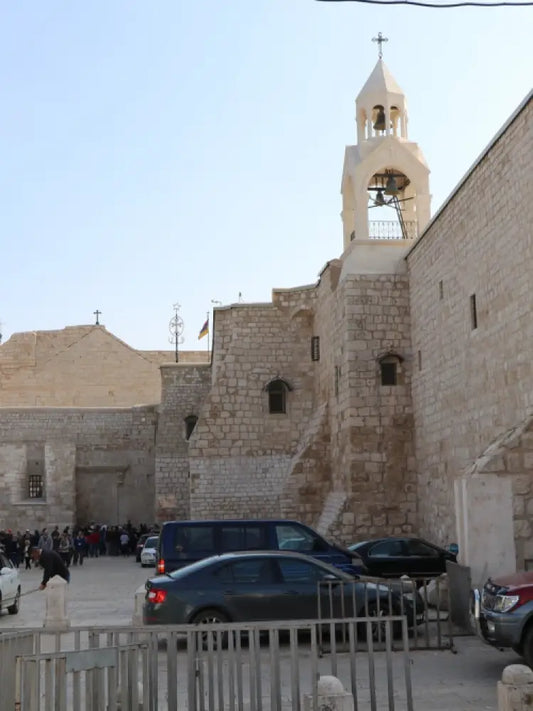
a church with a cross hanging from it's side — Photo by Lisa Forkner on Unsplash
The Milk Grotto is roughly 10 km — about 6 miles — south of Jerusalem's Old City. There are three reasonable ways to do it. Every single one worth knowing.
If you go independently you will pass through Checkpoint 300 on the way back into Jerusalem. Its straightforward, but the first time can feel disorienting if youve never seen it — I wrote a practical guide to Checkpoint 300 for exactly this reason. Read it before you go and the whole thing becomes a non-event. Thats the difference.
Summary Table: Three Bethlehem Sites in One Day

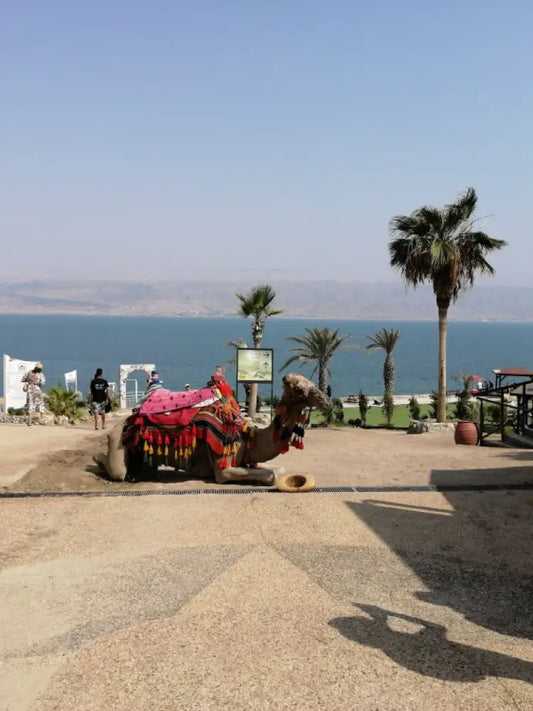
people walking on street near concrete building during daytime — Photo by Levi Meir Clancy on Unsplash
Three sites. Three different stories.
One morning.
A Bethlehem Moment

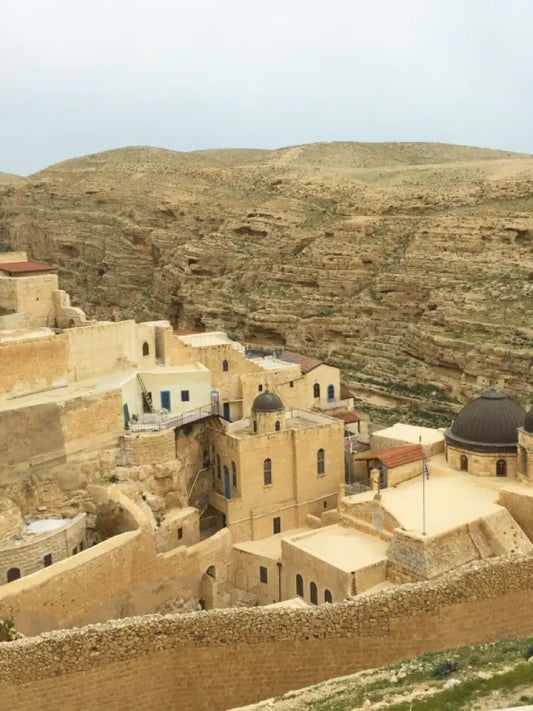
aerial view of buildings near ocean — Photo by Thalia Tran on Unsplash
A few years back I walked a couple from Manila through Bethlehem. They had asked specifically to visit the Milk Grotto — they had been trying to have a child for seven years. Seven years. They heard about the site from a priest in their parish in Quezon City, carried that hope all the way here, and prayed in the cave for about forty minutes. I waited outside. They took two small packets of the powder home with them.
In May of 2026 they came back. Baby girl in a sling against her mother's chest. Her name was Yara. She slept through the entire visit while we walked back through Manger Square to Abu Shanab's for knafeh. Think about that.
You decide what to do with a story like that. I just tell you what I have seen. Thats the difference. And Im not just saying that because I've spent my life guiding people here.
Key Takeaways
- The Milk Grotto is in Bethlehem, about 200 meters (3 minutes walking) from the Church of the Nativity. It has been run by the Franciscans since 1871.
- Entry is free. Small packets of the white limestone powder are handed out free of charge, and donations are encouraged.
- Tradition links the site to the Flight to Egypt; pilgrims of Catholic, Coptic, Maronite and Orthodox traditions visit, often praying for a child.
- Plan 20 to 25 minutes for the visit. Combine it with the Church of the Nativity, Shepherds Field, and lunch on Manger Square for a full Bethlehem day.
- The site is open daily from 8 AM, closing at 5 or 6 PM depending on season, and closed during Sunday morning Mass.
🌱 Plan Your Holy Land Tour


Frequently Asked Questions

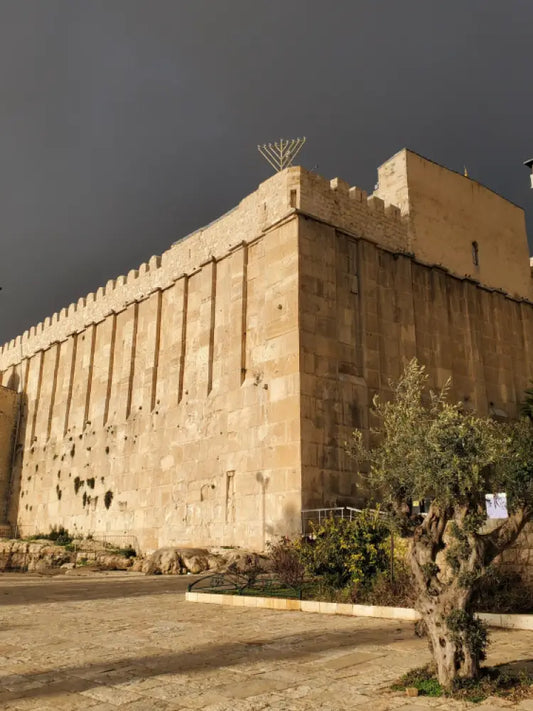
brown mosque at daytime — Photo by Toa Heftiba on Unsplash
What is the Milk Grotto in Bethlehem and why is it sacred?
I mean, the Milk Grotto is a small chalk-white limestone cave just 200 meters from the Church of the Nativity, traditionally identified as the place where the Holy Family rested during the Flight to Egypt. According to local tradition, a drop of Mary's milk fell on the stone and turned it white. It has been a Christian pilgrimage site since at least the 4th century, and the current Franciscan chapel above the cave was finished in 1871 (this is one of those things where I could go on for an hour — ask me in person sometime and I will). Worth it.
How do I get from the Church of the Nativity to the Milk Grotto?
You walk. Exit the Church of the Nativity through Manger Square, follow the right-hand side of the church wall southeast, and continue down Milk Grotto Street for about 200 meters. The walk takes 3 to 5 minutes and is well signed in English, Arabic and Italian. You dont need a taxi or a guide to find it.
Is the Milk Grotto free to visit in 2026?
Yes. Entry is free, and the white limestone powder packets handed out by the Franciscans are also free of charge. The site is supported by donations, so most visitors leave a small contribution in the donation box near the entrance — 5 to 20 shekels is typical and appreciated.
Why do people take white chalk powder from the Milk Grotto?
The white powder is small fragments of the cave's natural limestone wall, and Catholic, Coptic and Orthodox tradition associates it with prayers for fertility, healthy pregnancy, and the wellbeing of mothers and infants. The Franciscan custodians keep documented testimonies from pilgrim families — over 1,700 since the early 2000s — who returned to thank the shrine after the birth of a child. See what Im getting at?
Is the Milk Grotto safe to visit in 2026?
Yes. Bethlehem is open to international visitors in 2026, the Milk Grotto is a quiet residential-area shrine staffed by Franciscan brothers, and there have been no security incidents at the site in recent memory. The most sensible approach is to come with a local guide or driver who knows the routes and timings — for context on the practical side of crossing, see our Checkpoint 300 guide.
How long should I plan for a visit to the Milk Grotto?
Plan 20 to 25 minutes for a normal visit.
That gives you time to enter the lower cave, sit for a few minutes, walk through the 2007 New Chapel, collect a powder packet, and leave a donation. If you are praying or attending part of a Mass it can stretch to 45 minutes or more, and pilgrims who come specifically for fertility prayers often stay an hour.
Related Reading

green trees under white clouds during daytime — Photo by Tetiana SHYSHKINA on Unsplash
- The complete Church of the Nativity guide for 2026
- A full day in Bethlehem: walking through faith, history, and the desert
- What actually happens at Checkpoint 300
- Best time to visit Bethlehem in 2026
If you are planning to come to Bethlehem, come. Walk the three minutes between the Nativity and the Milk Grotto. Sit in the cave for a few minutes.
Take a small packet of powder home with you, even if you are not praying for anything specific — it is a small piece of the place, and Bethlehem is the kind of place worth carrying with you.
When you are ready, reach out to us and we will put together a day in Bethlehem that does not skip the things most tours skip.
Elias Boaz is a licensed tour guide from Bethlehem — birthplace of Jesus Christ — and the founder of Elijah Tours. He has guided thousands of pilgrims through Bethlehem, Jericho, and the Jordan River Valley — and coordinates Holy Land tours with trusted licensed guides across the region. He writes to help visitors truly understand what they're seeing.




4 comments
Não sabia disso sobre The Milk Grotto in Bethlehem. Muito interessante!! Speaking of which, o presépio de madeira de oliveira que comprei ano passado is one of my favorite things.
Bellissimo articolo su The Milk Grotto in Bethlehem! Che gioia leggere questo. Bellissimo, davvero.
Shared this with my family — they loved it. Beautifully explained. I actually have a few carvings I’ve collected from Bethlehem artisans and it’s wonderful.
Bookmarked this to come back to later. So informative. 😊